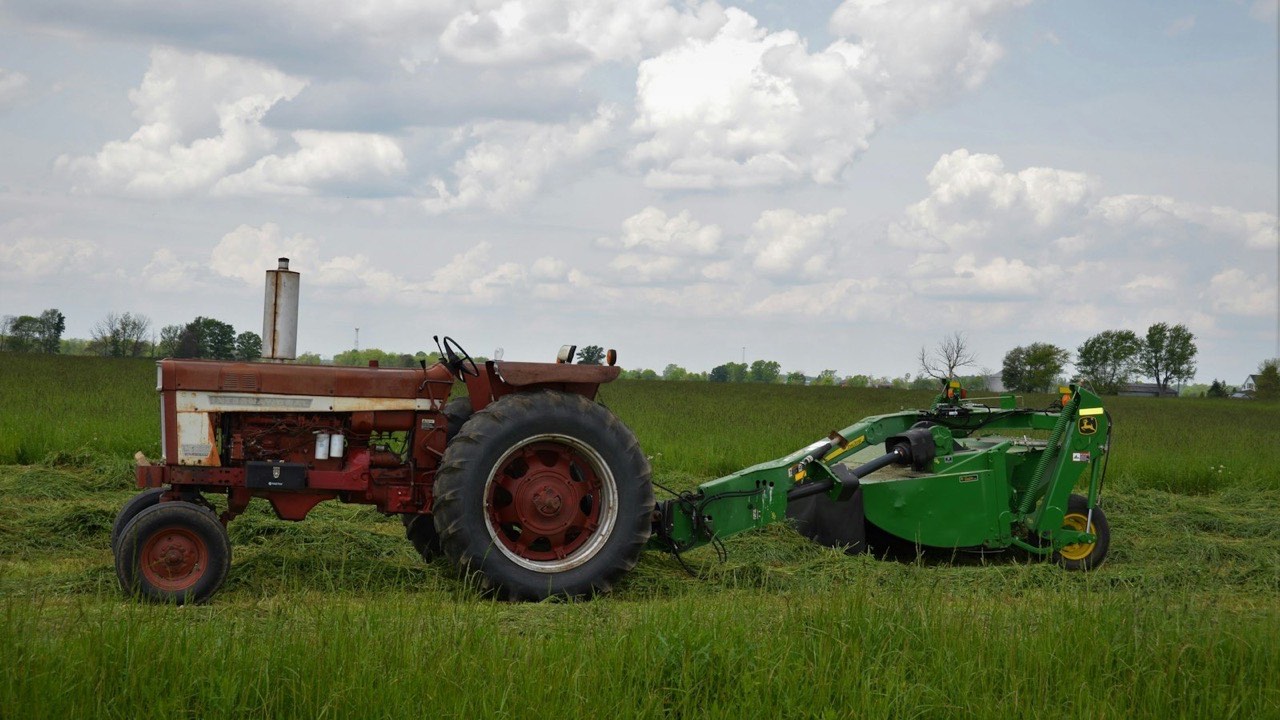
Next time you pass a highway crew trimming the verge, look at what’s on the back of the tractor. It’s almost never a rotary brush hog — it’s a flail. That’s not habit or brand loyalty; it’s a deliberate choice, and safety is a big part of it. A flail mower cuts with dozens of small blades hung off a fast-spinning rotor instead of one or two long ones, and that design is what lets it work close to traffic, along ditch banks, and through mixed grass-and-brush that would defeat, or endanger people around, a simpler machine. Understanding the jobs it’s built for is the fastest way to know whether it — and which blades — belong on your equipment.
The jobs flail hammer blades were built for
A flail earns its keep across a surprisingly wide spread of vegetation work:
- Roadside verge and embankment maintenance. The classic municipal job — keeping sightlines clear and drainage working along roads and shoulders.
- Ditch and canal banks, and slopes. With an offset or articulating arm, a flail head swings from below horizontal up to vertical, reaching banks and steep verges a rotary simply can’t get to safely.
- Land clearing, brush, and brambles. This is the heavy end, where the mass of hammer blades pulverizes woody stems and wiry brambles that would bend a lighter blade.
- Orchards, vineyards, fencelines, and pasture. Offset arms mow under tree canopies and tight along fences, and the fine clippings feed the floor.
- Overgrown, neglected ground and storm cleanup. A flail takes mixed grass-to-brush in a single pass instead of forcing you to switch tools.
The through-line is variety: one machine that handles light grass one hour and heavy brush the next, in places other mowers can’t reach. A typical week on a rural-roads contract makes the point — Monday mowing miles of grassy verge, Tuesday dropping the offset arm to reach a canal bank choked with brush, Wednesday cleaning up saplings a storm dropped along a fenceline. A rotary would need help on two of those three, and wouldn’t be welcome swinging debris on the first. The flail does all of it, and the only thing that changes is which blades are on the rotor.
Why a flail, not a rotary or brush hog
If a brush hog is cheaper and faster in an open field — and it is — why do the crews above reach for a flail? A few reasons that matter most exactly where they work:
Contained debris. This is the safety headline. A flail’s blades pivot back on impact rather than taking the hit head-on, which keeps clippings and anything they strike down low and contained instead of firing it out sideways. Near traffic, fences, parked cars, or bystanders, that difference is the whole ballgame — it’s why FDOT and FHWA guidance points to flail mowers for roadside and urban right-of-way work to limit liability.
Safer around rocks and obstacles. Those same pivoting blades ride over rocks and hidden obstacles instead of launching them, which matters on rough or unknown ground. It also saves the machine: a rotary blade that catches a buried rock can bend a shaft or crack a gearbox, while a flail blade just swings back and keeps going, and the worst case is one damaged blade you swap out.
A cleaner, even cut and real versatility. Flails leave a more even finish across mixed vegetation and move from grass to brush without a blade change. The trade-off is honest: a flail is heavier, slower, and costs more than a brush hog for wide-open rough mowing. You’re paying for safety, finish, and terrain reach — so specify it where those actually earn their keep, not for mowing a bare paddock.
The mulch bonus
There’s an agronomic payoff that’s easy to overlook. Because a flail shreds material finely rather than laying down long clippings, that residue breaks down faster — smaller fragments feed soil microbes quicker and return organic matter and nutrients to the ground. On pasture and orchard floors, where nutrient cycling is part of the management plan, that fine mulch is a genuine benefit, not just a tidier look.
Which of these jobs need hammer blades
The applications above split cleanly by blade type. Grass, soft growth, and clean-finish work suit light Y-blades. But the moment you’re into brush, brambles, saplings, woody ditch banks, or genuine land clearing, you want the mass and impact strength of hammer blades — Y-blades wear and bend fast in that stuff. It’s the same rotor and the same mount; the blade is what you match to the vegetation. If your work sits at that heavier end, the hammer-blade options built for it are worth a look — visit page for the range — and remember to change them as a balanced set so the rotor runs true.
Pick a flail when the job is near people, on a bank, over rocks, or a mix of grass and brush — that’s where its safety, reach, and finish beat a brush hog. Then match the blade to what you’re actually cutting, and the same machine will carry you from a manicured verge to a cleared thicket without missing a step.